
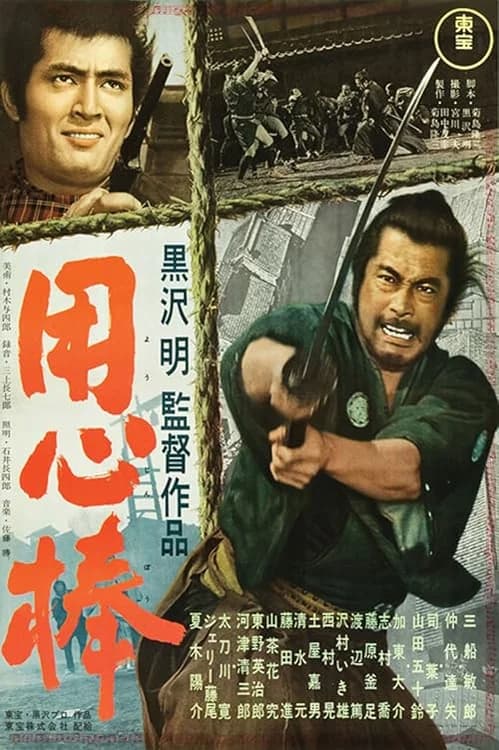
About Yojimbo
Akira Kurosawa's 1961 masterpiece 'Yojimbo' stands as one of the most influential action films ever made, seamlessly blending thrilling samurai combat with sharp social commentary and dark humor. The film follows a nameless, masterless samurai (ronin) played with iconic physicality by Toshiro Mifune, who wanders into a town torn apart by two vicious criminal factions. Seeing an opportunity, the cunning ronin decides to sell his services as a bodyguard ('yojimbo') to both sides, systematically manipulating them into destroying each other and, in the process, liberating the oppressed townspeople from their grip.
Toshiro Mifune delivers a career-defining performance, embodying the character's world-weary intelligence, sardonic wit, and explosive martial prowess. His portrayal created the archetype of the lone, morally ambiguous anti-hero that would later inspire countless Westerns and action films, most notably Sergio Leone's 'A Fistful of Dollars.' Kurosawa's direction is masterful, balancing tense, atmospheric build-ups with brilliantly choreographed and visceral sword fights. The black-and-white cinematography by Kazuo Miyagawa is stunning, using deep shadows and stark compositions to create a palpable sense of decay and moral corruption in the dusty town.
Viewers should watch 'Yojimbo' not only for its historical importance as a genre-defining classic but for its sheer entertainment value. The plot is a brilliantly constructed chess game of deception and survival, the characters are memorably grotesque and compelling, and the action remains impactful and exciting. It is a perfect entry point into Kurosawa's filmography and essential viewing for anyone interested in the evolution of cinematic storytelling, the samurai genre, or simply a brilliantly told tale of cunning versus brute force.
Toshiro Mifune delivers a career-defining performance, embodying the character's world-weary intelligence, sardonic wit, and explosive martial prowess. His portrayal created the archetype of the lone, morally ambiguous anti-hero that would later inspire countless Westerns and action films, most notably Sergio Leone's 'A Fistful of Dollars.' Kurosawa's direction is masterful, balancing tense, atmospheric build-ups with brilliantly choreographed and visceral sword fights. The black-and-white cinematography by Kazuo Miyagawa is stunning, using deep shadows and stark compositions to create a palpable sense of decay and moral corruption in the dusty town.
Viewers should watch 'Yojimbo' not only for its historical importance as a genre-defining classic but for its sheer entertainment value. The plot is a brilliantly constructed chess game of deception and survival, the characters are memorably grotesque and compelling, and the action remains impactful and exciting. It is a perfect entry point into Kurosawa's filmography and essential viewing for anyone interested in the evolution of cinematic storytelling, the samurai genre, or simply a brilliantly told tale of cunning versus brute force.


