About The Great Silence
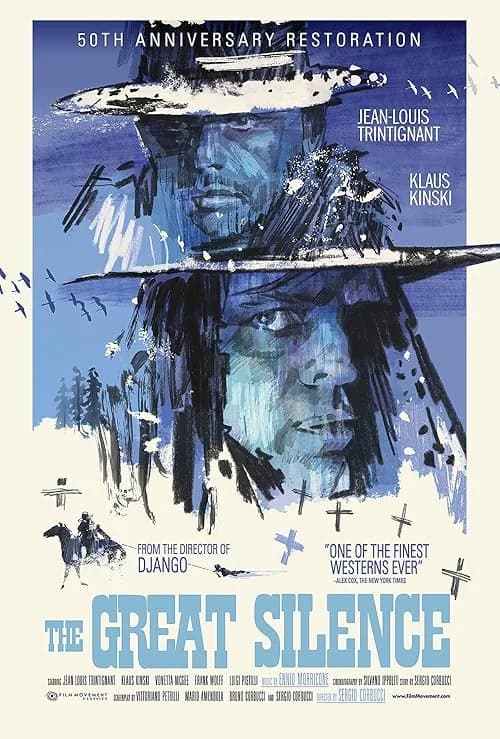
Sergio Corbucci's 1968 masterpiece, The Great Silence (Il grande silenzio), stands as one of the most unique and bleakly poetic entries in the Spaghetti Western genre. Set against the harsh, snow-covered landscapes of Utah, the film follows the mute gunslinger Silence (Jean-Louis Trintignant), who communicates solely through his pistol. He arrives in a town terrorized by the ruthless bounty hunter Loco (Klaus Kinski) and his gang, who are systematically killing outlaws under the protection of a corrupt law that offers bounties. Hired by the townspeople and a widow seeking vengeance, Silence becomes their only hope in a brutal, morally ambiguous conflict.
The film is renowned for its subversion of genre tropes, offering a stark, nihilistic vision far removed from the romanticism of traditional Westerns. Jean-Louis Trintignant delivers a powerfully understated performance, conveying profound emotion through silence and action alone. Klaus Kinski is terrifyingly charismatic as the villain Loco, creating one of cinema's most memorable antagonists. Corbucci's direction is masterful, using the unusual snowy setting to enhance the film's atmosphere of isolation and despair, complemented by Ennio Morricone's haunting, melancholic score.
Viewers should watch The Great Silence for its artistic ambition, gripping narrative, and unforgettable ending that challenges conventional morality. It's a must-see for fans of Westerns and European cinema, offering a thought-provoking and visually stunning experience that explores themes of justice, violence, and futility. Its cult status and critical acclaim are well-deserved.
The film is renowned for its subversion of genre tropes, offering a stark, nihilistic vision far removed from the romanticism of traditional Westerns. Jean-Louis Trintignant delivers a powerfully understated performance, conveying profound emotion through silence and action alone. Klaus Kinski is terrifyingly charismatic as the villain Loco, creating one of cinema's most memorable antagonists. Corbucci's direction is masterful, using the unusual snowy setting to enhance the film's atmosphere of isolation and despair, complemented by Ennio Morricone's haunting, melancholic score.
Viewers should watch The Great Silence for its artistic ambition, gripping narrative, and unforgettable ending that challenges conventional morality. It's a must-see for fans of Westerns and European cinema, offering a thought-provoking and visually stunning experience that explores themes of justice, violence, and futility. Its cult status and critical acclaim are well-deserved.