About Alice, Sweet Alice
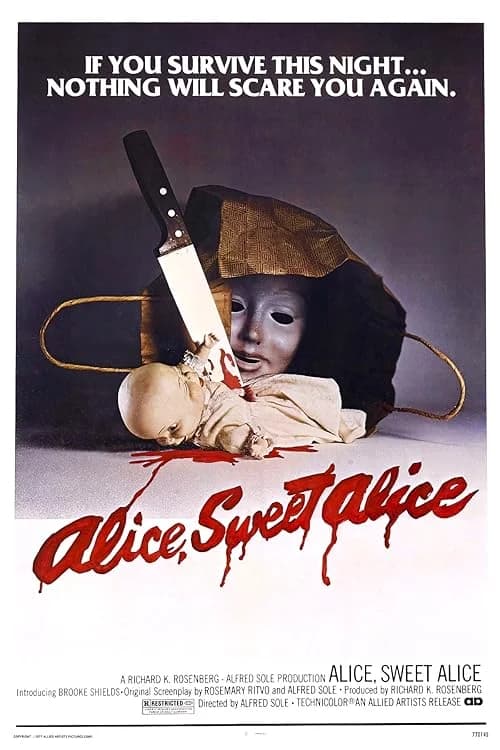
Alice, Sweet Alice (originally titled Communion) is a chilling 1976 American horror mystery that masterfully blends religious anxiety with family trauma. Set in 1961 New Jersey, the film follows the Spages family as their younger daughter Karen is brutally murdered during her First Holy Communion ceremony. The prime suspect becomes her troubled older sister Alice, who wears a disturbing translucent mask and exhibits unsettling behavior, though the truth proves far more complex as additional stabbings terrorize the community.
Director Alfred Sole creates an atmosphere of palpable dread through meticulous attention to Catholic iconography and working-class settings. The film's power lies in its ambiguous portrayal of guilt and innocence, with young Brooke Shields (in her film debut as Karen) and Paula Sheppard as Alice delivering memorably unsettling performances. The murder mystery unfolds with genuine tension, while the religious symbolism—communion wafers, ceremonial garments, and church settings—becomes genuinely terrifying.
Viewers should watch Alice, Sweet Alice for its unique position in horror history—a bridge between psychological thrillers and slasher conventions that would dominate later decades. The film's exploration of family dysfunction, religious guilt, and childhood malice remains disturbingly effective. With its atmospheric direction, memorable imagery (particularly the yellow raincoat and mask), and genuinely surprising mystery, this cult classic offers a compelling watch for horror enthusiasts seeking substance alongside scares. Its growing reputation as an underappreciated gem makes it essential viewing for understanding 1970s horror cinema.
Director Alfred Sole creates an atmosphere of palpable dread through meticulous attention to Catholic iconography and working-class settings. The film's power lies in its ambiguous portrayal of guilt and innocence, with young Brooke Shields (in her film debut as Karen) and Paula Sheppard as Alice delivering memorably unsettling performances. The murder mystery unfolds with genuine tension, while the religious symbolism—communion wafers, ceremonial garments, and church settings—becomes genuinely terrifying.
Viewers should watch Alice, Sweet Alice for its unique position in horror history—a bridge between psychological thrillers and slasher conventions that would dominate later decades. The film's exploration of family dysfunction, religious guilt, and childhood malice remains disturbingly effective. With its atmospheric direction, memorable imagery (particularly the yellow raincoat and mask), and genuinely surprising mystery, this cult classic offers a compelling watch for horror enthusiasts seeking substance alongside scares. Its growing reputation as an underappreciated gem makes it essential viewing for understanding 1970s horror cinema.